Part of the goal was also to show a variety of styles, applications and medium. They began with 247 images. After consideration, each of the women narrowed the choices down by dividing the number in half. This was done several times until they got to the point where they discussed each piece. Coming from different backgrounds and perspectives, Anabella and Julia had different definitions of what constitutes a mosaic and what are the most important elements. Some of the pieces were in both lists; some were not. Through conversation, they influenced each other’s opinions, compromised, and eventually decisions were made; not an easy task. They were each able to choose their own recipient of the juror’s choice award.
SAMA tries to choose different judges every year, understanding that everyone brings to the table different backgrounds and perspectives. The judging process can be stressful and difficult. Although the pieces are viewed blindly, some of the works are completely recognizable, so, the challenge then was to only use what was in front of them to judge the work, and not their prior knowledge of the piece. One must be sure to view all works objectively. For Anabella, is has been a learning experiences; one she enjoyed and appreciates.
As always, the Art Salon was included in the registration fee. Unlike the MAI, the salon is not juried. It is all inclusive and all attendees can show their work and has this option to include it in the silent auction. Attendees are able to purchase smaller, more affordable pieces and had over 100 works to choose from.
Naturally, the format was different this year. Everyone was in the same room at the same time. Photographs of each piece, a description and alternate view appeared where bidding took place. Unfortunately, there were technical glitches that caused the bidding and sale prices to be shortened but there were still purchases. Alyssa was very excited that she won the bid for Carol Stirton -Broad’s Memory Ware Mosaic Jug. Carol wasn’t as fortunate and was disappointed when she was out bid on the three pieces she wanted.
An integral part of the of the conference that could not be adapted and was missed by our members was t missed was the Mosaic marathon room. In this room, participants come together to create a large-scale mosaic. Attendees are able to work on a section of the piece in their free time. The result is a lasting piece of art that is donated to a local charity or needy establishment in our host conference city. This is usually a social, creative, and productive time.
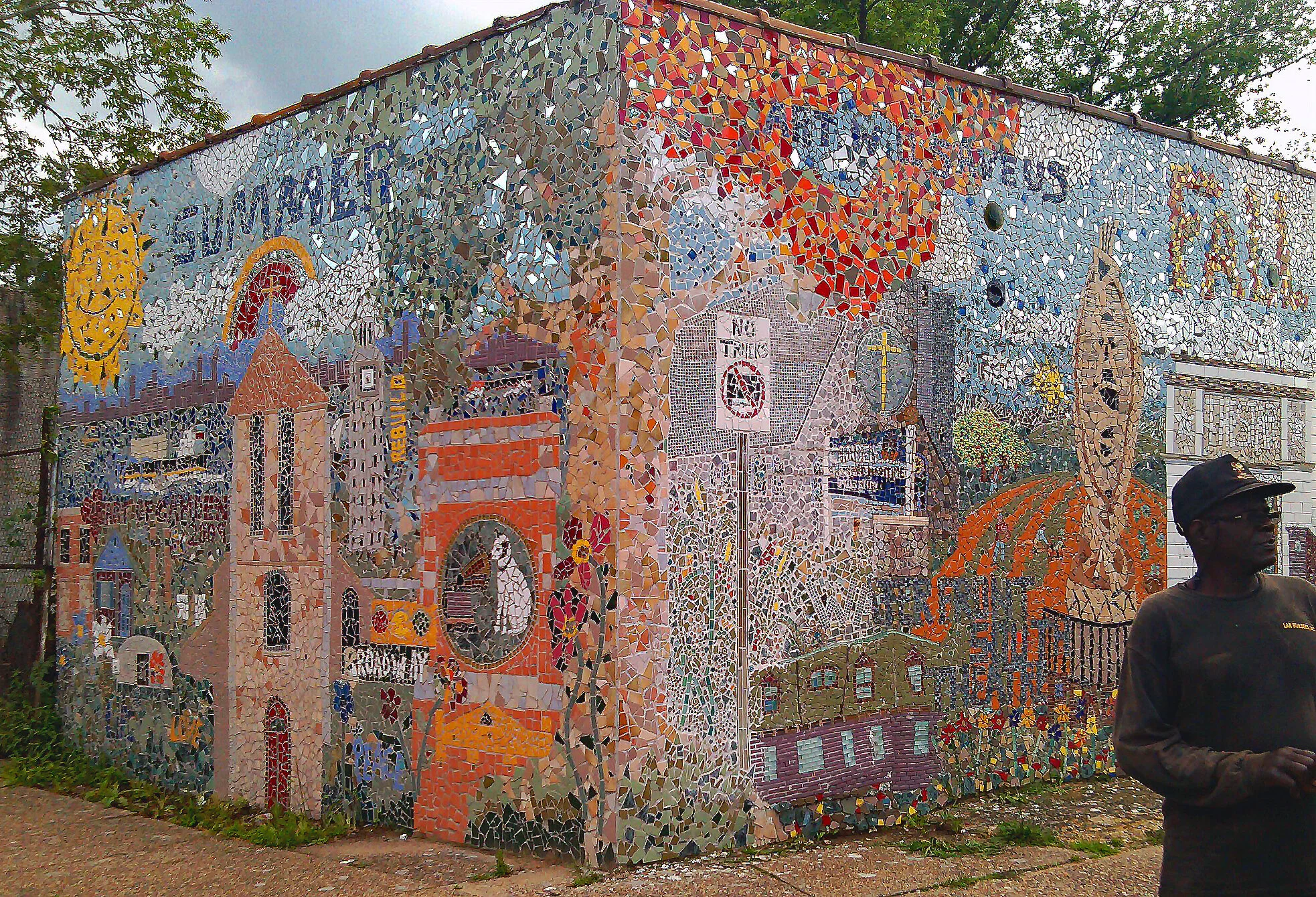
Jessica Liddell became more involved with the conference after volunteering on the project in 2015 when Philadelphia was the host city. Many MSOP members were instrumental in making it a huge success. The benefactor was the Robert Morris Elementary School in North Philadelphia; the piece is set in the school lobby and is meant to add to the environment.
Networking and socializing are always a big part of a conference. People who travel consistently look forward to seeing others they don’t get to see during the year. In fact, MSOP began at the SAMA summit when a group of artists decided that it would be nice to get together with other more than once a year for local support. Although there were no kisses and hugs, participants were able to chat and socialize with others. Carol Stirton-Broad sat “next to” a friend and they were able to comment during the presentations on their private devices.
There are advantages to a virtual event. People with mobility, financial issues, or travel issues are able to participate. Several of our members had only attended the conference when it was in Philadelphia several years ago, but really enjoyed it this year. The change in schedule allowed those who instructed or moderated were able to view call the presentations, something they were able to do before.
Carol Shelkin thought it was brilliant that the organizers taped the presenters to have access for two weeks following. She was thrilled to be able to watch a couple presenters during the following week that she would have missed for an appointment.
Suzanne enjoyed being in her own home. Watching presentations in a favorite chair is more comfortable than a dark conference room. One can get up and move without disturbing others.
The six women I interviewed unanimously agreed that this year’s summit, with all its challenges, was a great success. The volunteers, presenters, and instructors all did an outstanding job. They all plan to attend again. I know I am hoping that by next spring we will be back to some type of “normal lives” and attending live events. However, the virtual platform has enabled us to reach to more people across the globe.
When I asked the woman why they attended the conference, there were common threads. SAMA is an important organization and this is a way to support the community as it is their major fundraiser. Sometimes, being an artist is a solitary job. It’s a wonderful opportunity to be with old friends and new, in a nurturing, creative environment where we can learn and grow together.